Research Interests

My research focuses on uncovering the mysteries of distant worlds by studying their atmospheres. I specialize in using infrared spectroscopic phase curves, a powerful method for exploring the three-dimensional structure of exoplanet atmospheres. Through a technique called spectral retrieval, I analyze these observations to map atmospheric properties, construct energy balance models, identify wind and cloud patterns, and reveal the chemical composition of these alien worlds.


Exoplanet Phase Curves

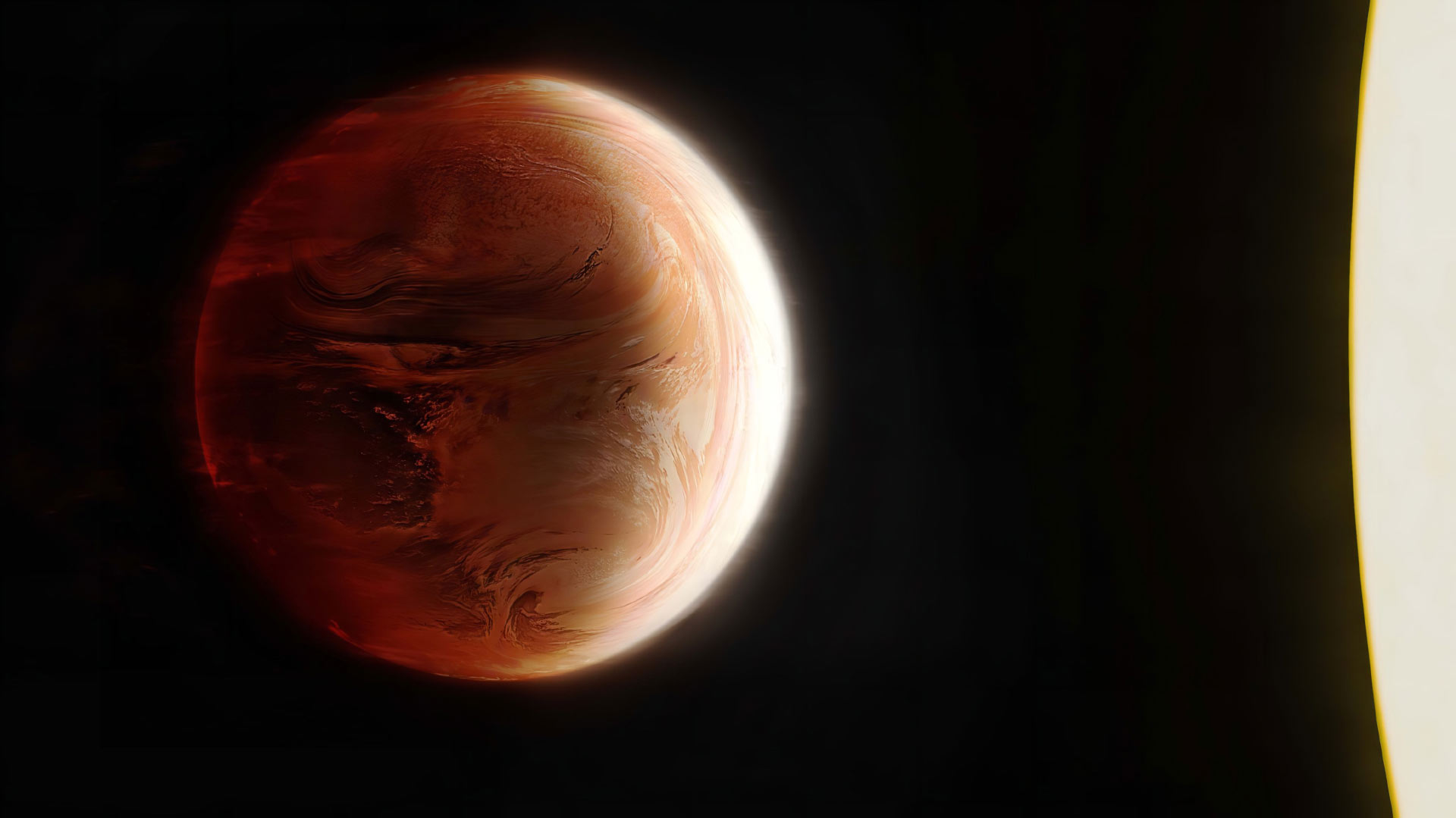
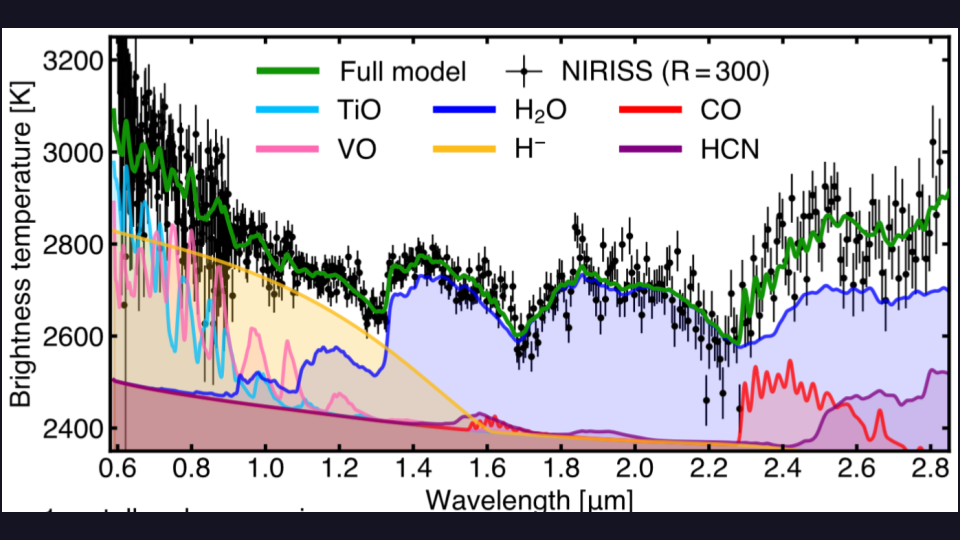
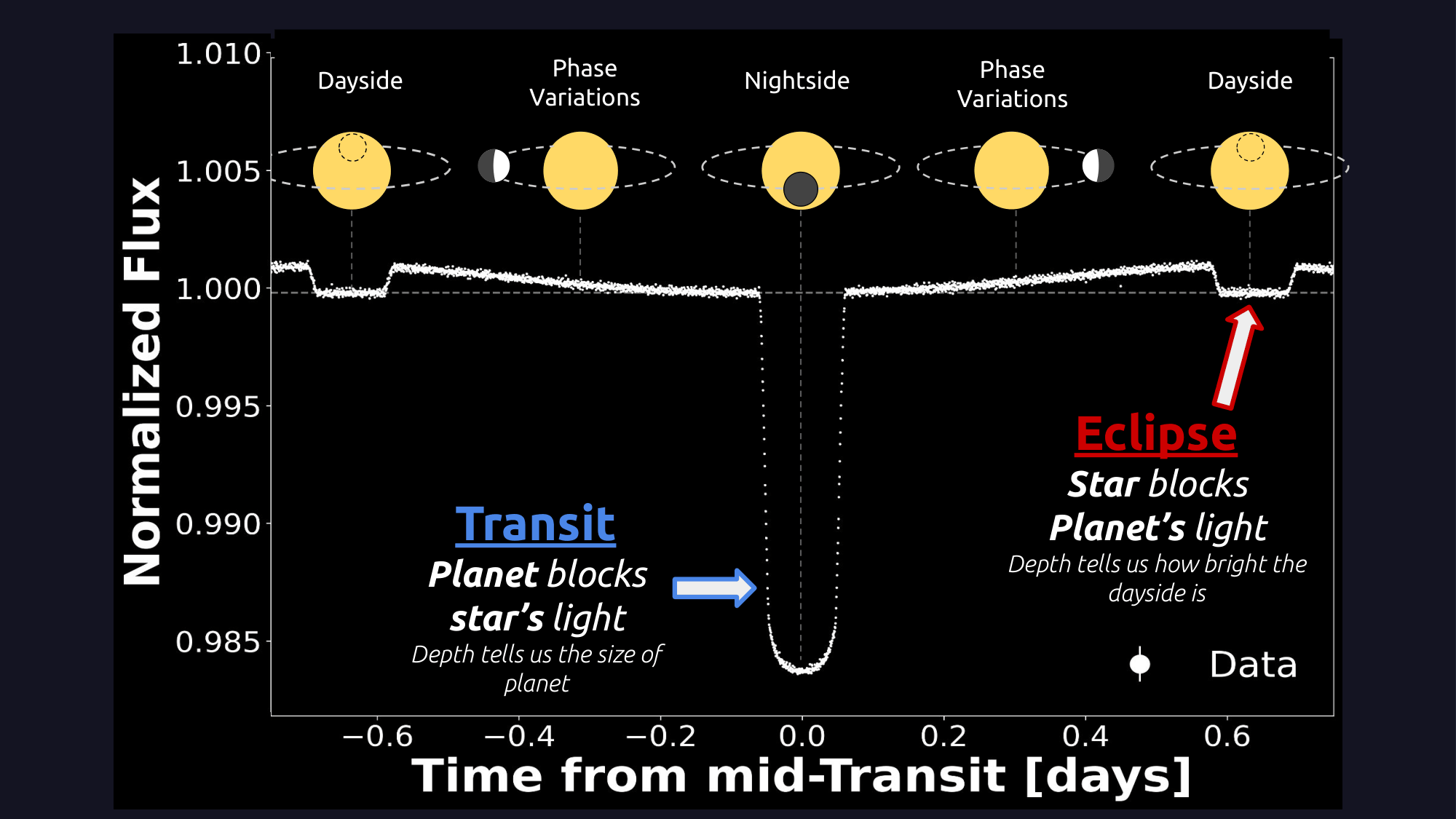
Exoplanet phase curves track how a planet's brightness changes throughout its orbit, capturing both thermal emission and reflected light. By modeling these variations, we can constrain longitudinal temperature structure, cloud coverage, and atmospheric circulation. Phase curves, while time intensive, provide a uniquely powerful probe of the three-dimensional structure of exoplanet atmospheres. Data from WASP-121b NIRISS/SOSS phase curve presented in Splinter et al. (2025)

Atmospheric Dynamics and Composition

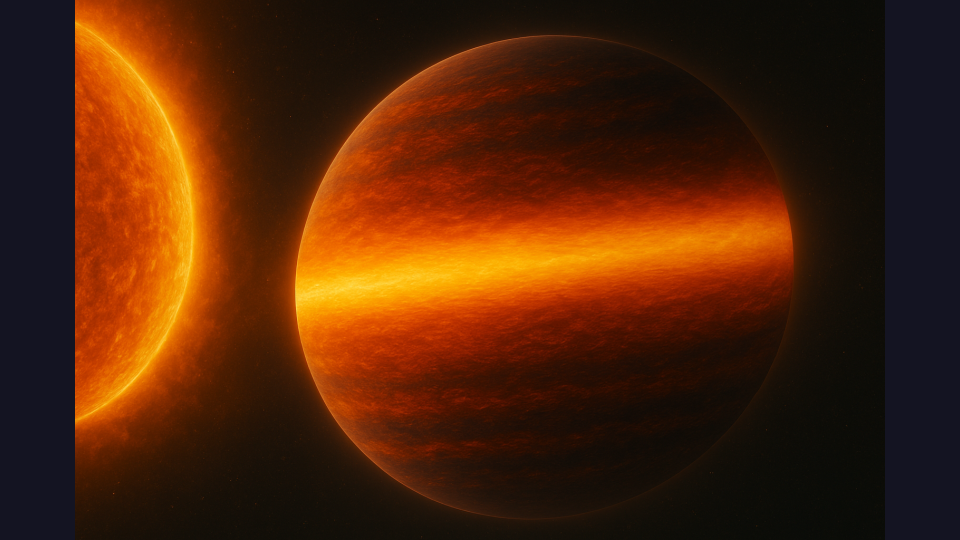
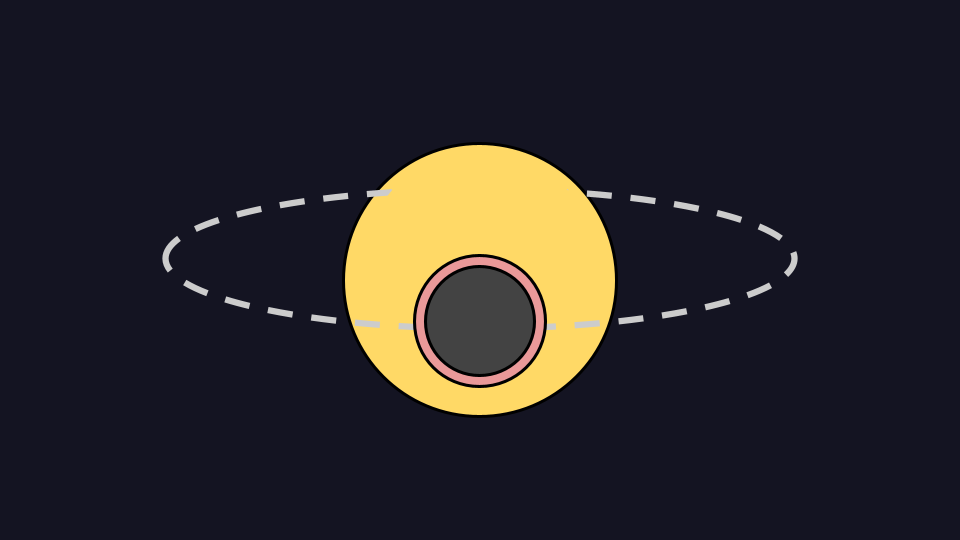
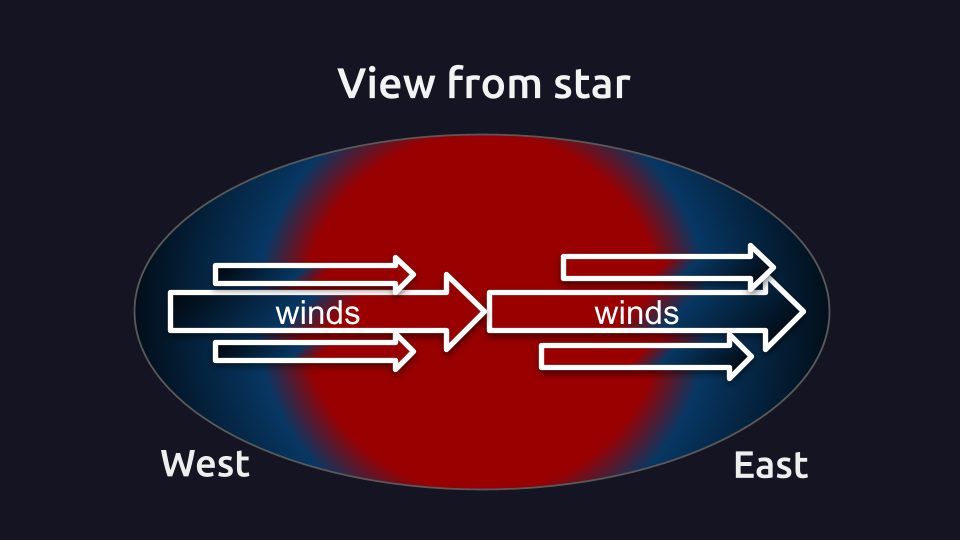
Hot, tidally locked exoplanets exhibit strong day-night temperature contrasts that drive vigorous atmospheric circulation. We can use phase curves to investigate heat redistribution, wind patterns, global energy budgets and their impact on observable properties. In parallel, spectral measurements enable constraints on atmospheric composition, linking observed properties to underlying physical and chemical processes. Image from chatGPT

Reflected Light in Exoplanet Atmospheres

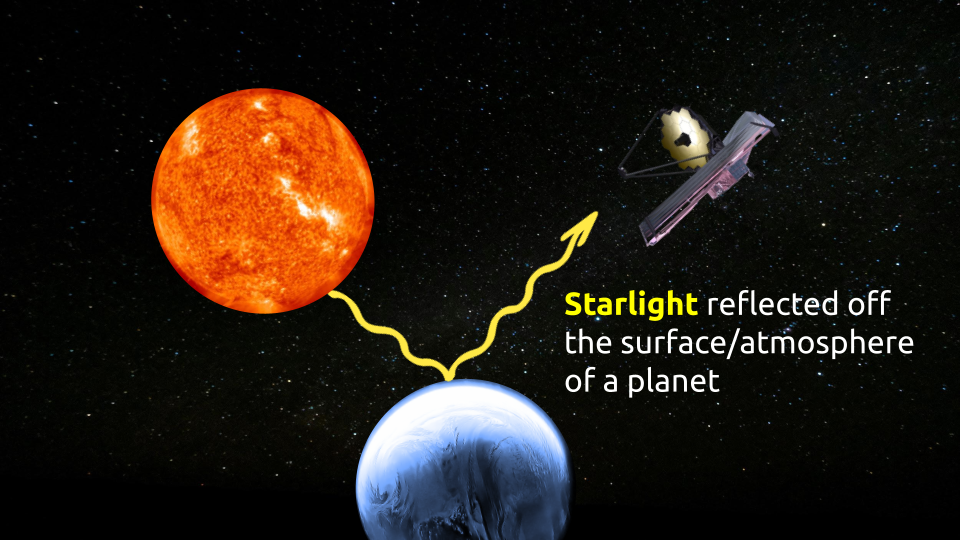
Reflected starlight offers a complementary view of exoplanet atmospheres, particularly at shorter wavelengths where thermal emission is weaker. I study how clouds, hazes, and atmospheric structure shape reflected light signals and phase-dependent brightness. These measurements provide key constraints on albedo, cloud properties, and atmospheric scattering processes.

Exoplanet Demographics

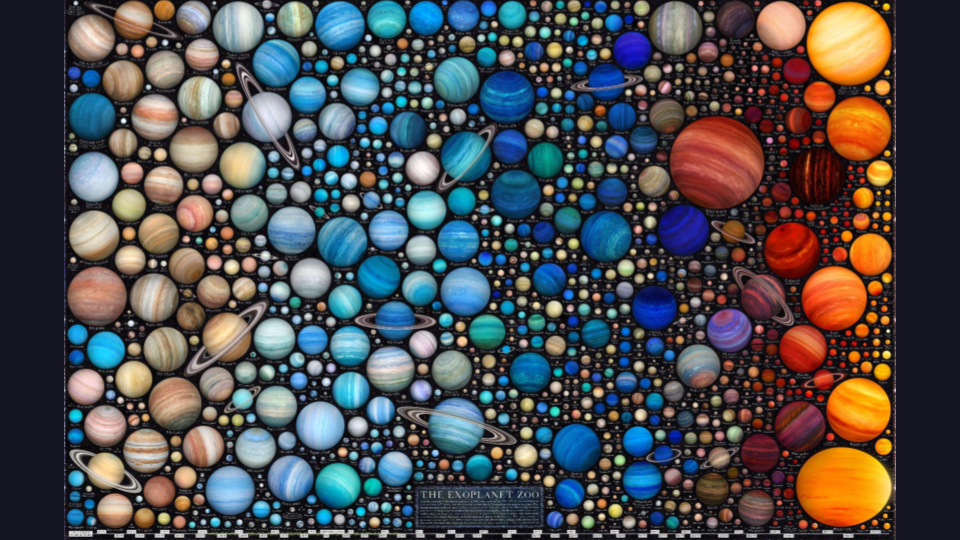
The diversity of exoplanets provides important clues to their formation and evolutionary histories. I am interested in using statistical approaches, including Bayesian hierarchical modeling, to study population-level trends in planetary properties. This work connects individual atmospheric measurements to the broader context of planetary systems. Image credit: Halcyon Maps

My Projects

Figure credit: Engine House VFX.

The Energy Budget of WASP-121 b with a JWST NIRISS/SOSS Phase Curve

I recently submitted a paper providing precise constraints on the popular ultra-hot Jupiter WASP-121b. We obtained these constraints from a Phase Curve with a JWST NIRISS/SOSS observation as part of the NEAT Guaranteed Time Observation. From the probed wavelength range (0.6--2.85 micron) we capture an estimated 54--83% of the planet's bolometric flux, enabling the most concise constraints on the planet's energy budget to date. With this observation we are able to bridge the gap in previous phase curve observation estimates of Bond albedo and heat recirculation efficiency. We further investigate the wavelength dependent phase offset and reflected light at the short optical wavelengths and compare the retrieved effective temperature curve to a grid of toy energy balance models. This work is published in the Astronomical Journal, check it out!

Other works from the WASP-121b NIRISS/SOSS phase curve

I am also involved with these projects using parts of the WASP-121b dataset!

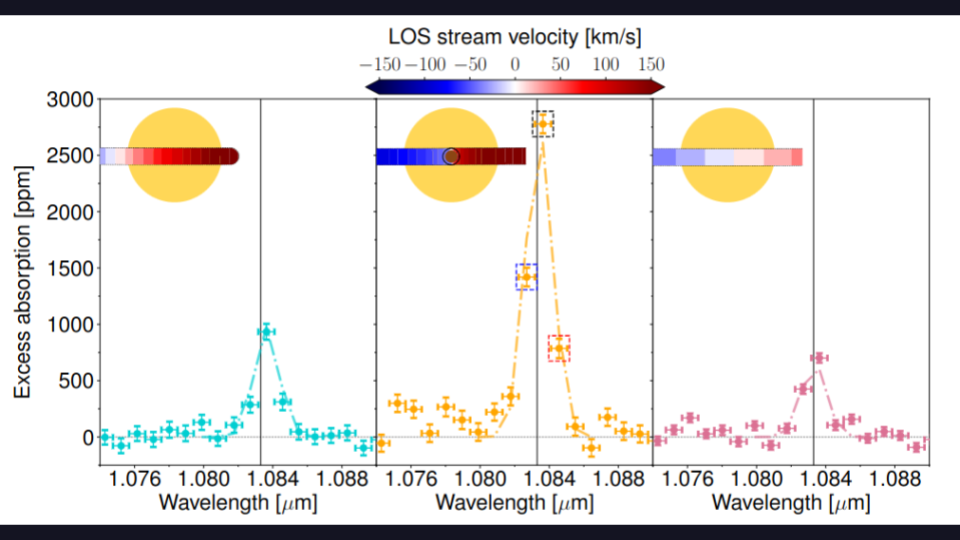
Helium Triplet

Analysis on the helium triplet line probing atmospheric escape finding absorption for over half the orbit! Allart et al. (2026)

Eclipse / Dayside

Analysis of the Eclipse of WASP-121b finding depleted Titanium on the dayside. Pelletier et al. (2026)

Transmission Spectrum

Analysis of the transmission spectrum of WASP-121b with NIRISS/SOSS. Analysis underway! MacDonald et al. (in prep)

Global Circulation Model

Creation of Global Circulation Models for WASP-121b to compare to phase observations. Frazier et al. (under review)

Side Projects

LTT 9779b NIRSpec Phase Curve

Phase Curve
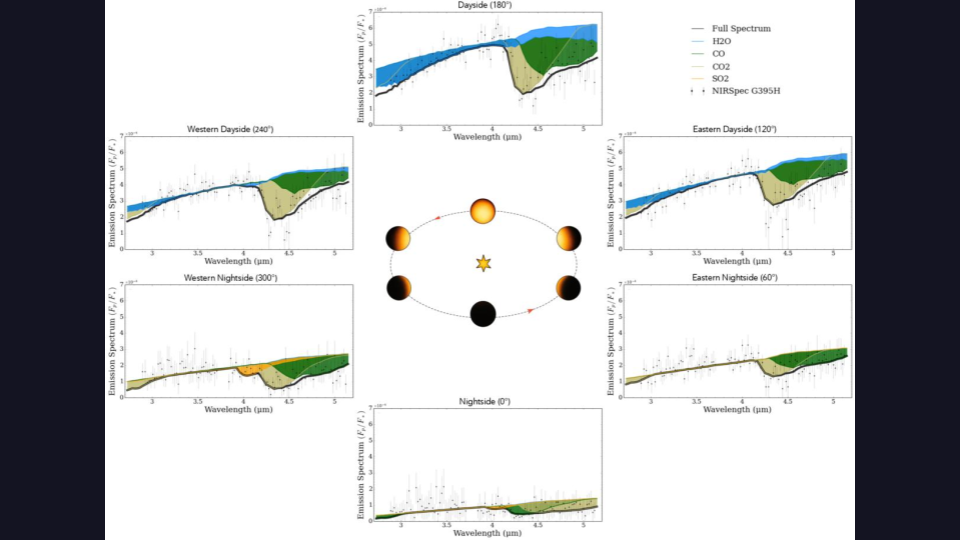
I helped co-supervise an undergraduate student (2nd author) on modeling the energy budget of this planet and I also contributed an independent data reduction. Ashtari et al. (2026)

Eclipse / Dayside
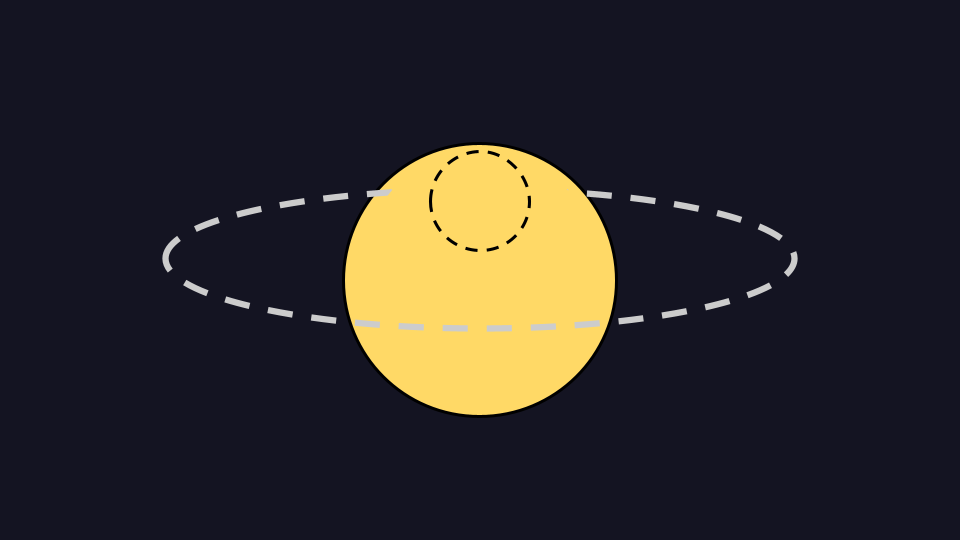
Analysis of the Eclipse of LTT 9779b, paper currently under review!Brande et al. (under review)

Spectral Retrieval of Transmission of WASP-107b with JWST/NIRISS
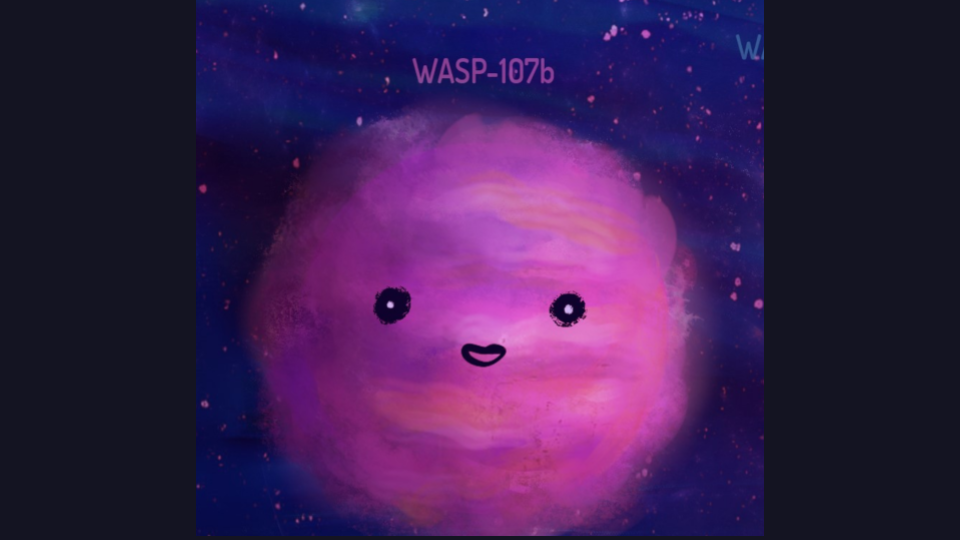
Figure credit: Daria Kiselava/ McGill Tribune.

WASP-107b is a ultra-low-density super-Neptune also known as a puffy planet or a 'super puff'. As part of the NEAT Guaranteed Time Observation we obtained a transit of the planet with JWST NIRISS/SOSS. My contribution was to provide spectral retrieval analysis with PyratBay, 1 of 3 retrieval codes used. However the main result of the paper was the discovery and modeling of a continuous helium signature indicating an escaping atmosphere pre and post transit indicating the power of JWST to detect the helium triplet in exoplanet atmospheres and potential for modelling the escaping atmosphere structure in other exoplanets.

This paper has been published in Nature Astronomy, you can find the preprint here or the Nature link here

Spectral Retrieval of the Highly Eccentric Planet HD 80606b with a Partial JWST NIRSpec/G395H Phase Curve
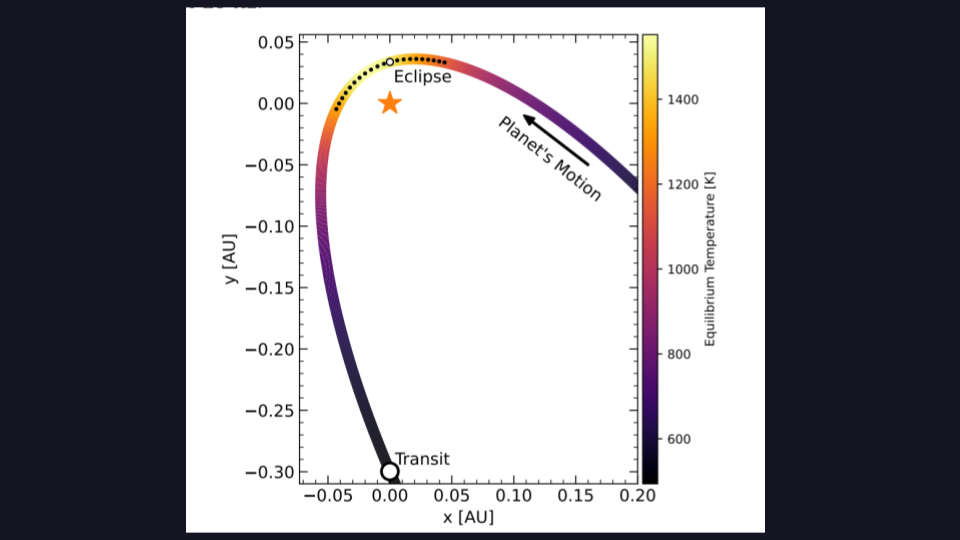
Figure showing HD 80806b's orbital motion and the observation at phases near eclipse - Sikora et al (2025)

I was involved in running spectral retrieval on the highly eccentric (e ~ 0.931; P ~ 111.4 days) Jupiter sized planet HD 80606b. In particular, I ran spectral retrieval analysis with PyratBay in emission at various orbital phases. In combination with the fiducial retrieval our results were in agreement showing a change in chemistry as the planet heated up as it got closer to the star.

In particular, our analysis found changing features in CO and CH4 before and after periapses. Such an analysis validated our predictions as well as serving to provide more confidence in the results of popular spectral retrieval codes and as a bonus to show the feasibility of partial phase curves with JWST NIRSpec G395H

This paper was published to The Astronomical Journal, you can find the NASA ADS link here
Coding and Analysis Skills

Throughout my current degree and my past Master of Data Science I have earned some extensive coding and analysis skills. For exoplanet science, I have knowledge in end-to-end analysis (observation -> data). For JWST data reduction I have experience with the exoTEDRF and Eureka! pipelines. For spectral retrieval for atmospheric inference I have experience with PyratBay and have recently dabbled with TauREx and petitRADTRANS. I also have experience using the toy energy balance model BELL_EBM which includes models for H2 dissociation in ultra-hot Jupiters.

I specialize in phase curves and so have lots of experience in fitting phase curve lightcurves involving batman and mapping the phase variations with sinusoids and slice models with the ability to create longitudinally resolved spectra.

I know Docker, astropy, pandas, data visualization and much more.

I love to collaborate! If you're interested in making use of any of my skills/knowledge please don't hesitate to email me.